Become a Scam Slayer: How to Spot Bank Scams and Protect Your Money
Scammers are getting more sophisticated, but one of the best defenses is surprisingly simple: know what your bank will never ask you to do.
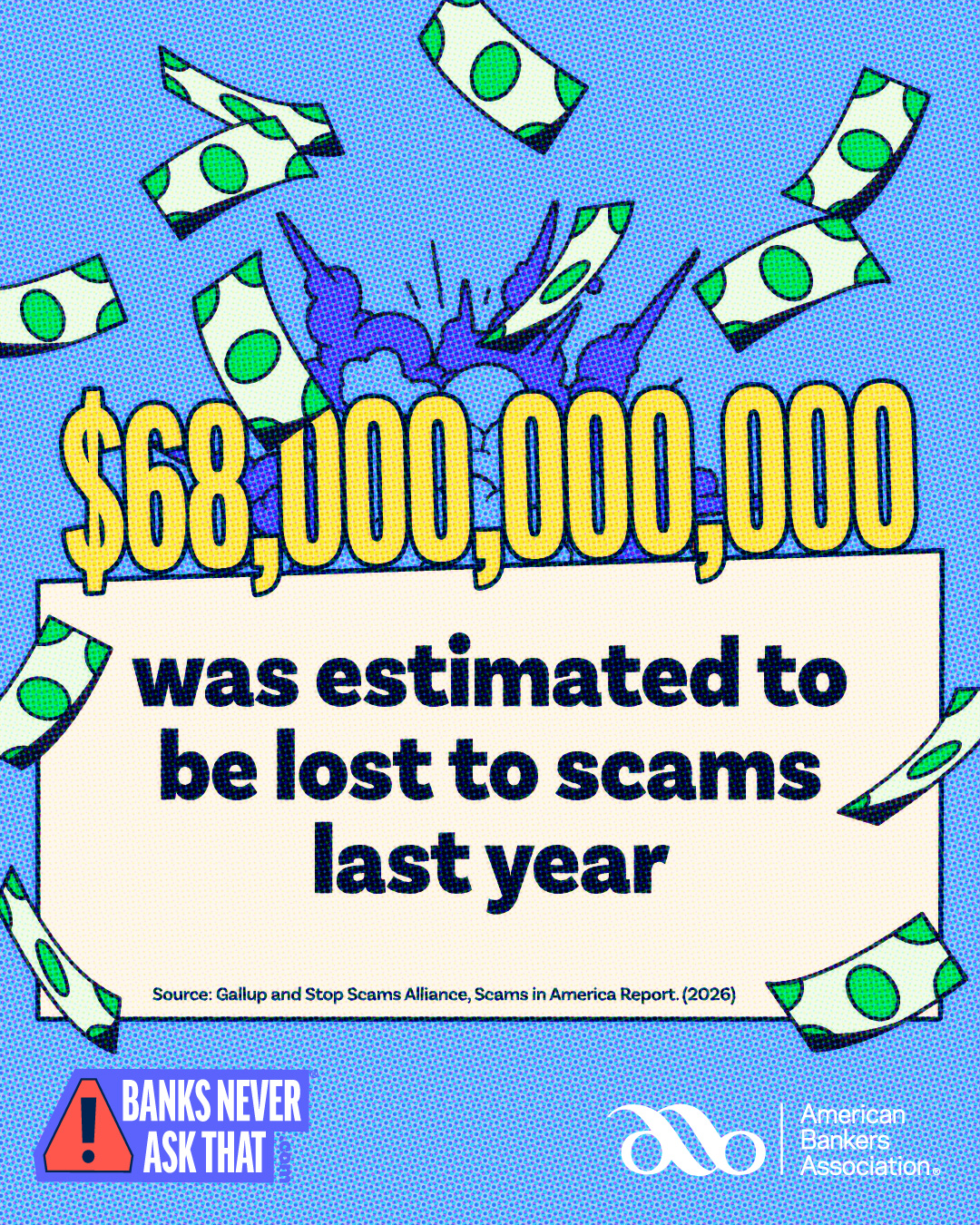
Nearly 3 in 4 Americans have experienced a scam or fraud attempt, according to a 2026 House Financial Services Committee report. A 2026 Gallup survey estimated that scams resulted in $68 billion in losses.
That’s why North Shore Trust and Savings is joining the American Bankers Association’s #BanksNeverAskThat campaign this October to help customers throughout northern Illinois recognize common scam tactics and better protect their money and personal information.
What Is #BanksNeverAskThat?
Every day, scammers use fraudulent emails, text messages and phone calls while pretending to be a bank, a loved one, the government or law enforcement. Their goal is often to convince you to reveal confidential information such as account numbers, passwords or PINs.
The #BanksNeverAskThat campaign helps consumers recognize these tactics before responding. Think of it as training to become a Scam Slayer: someone who knows the warning signs, stops suspicious interactions and verifies requests before providing information or sending money.
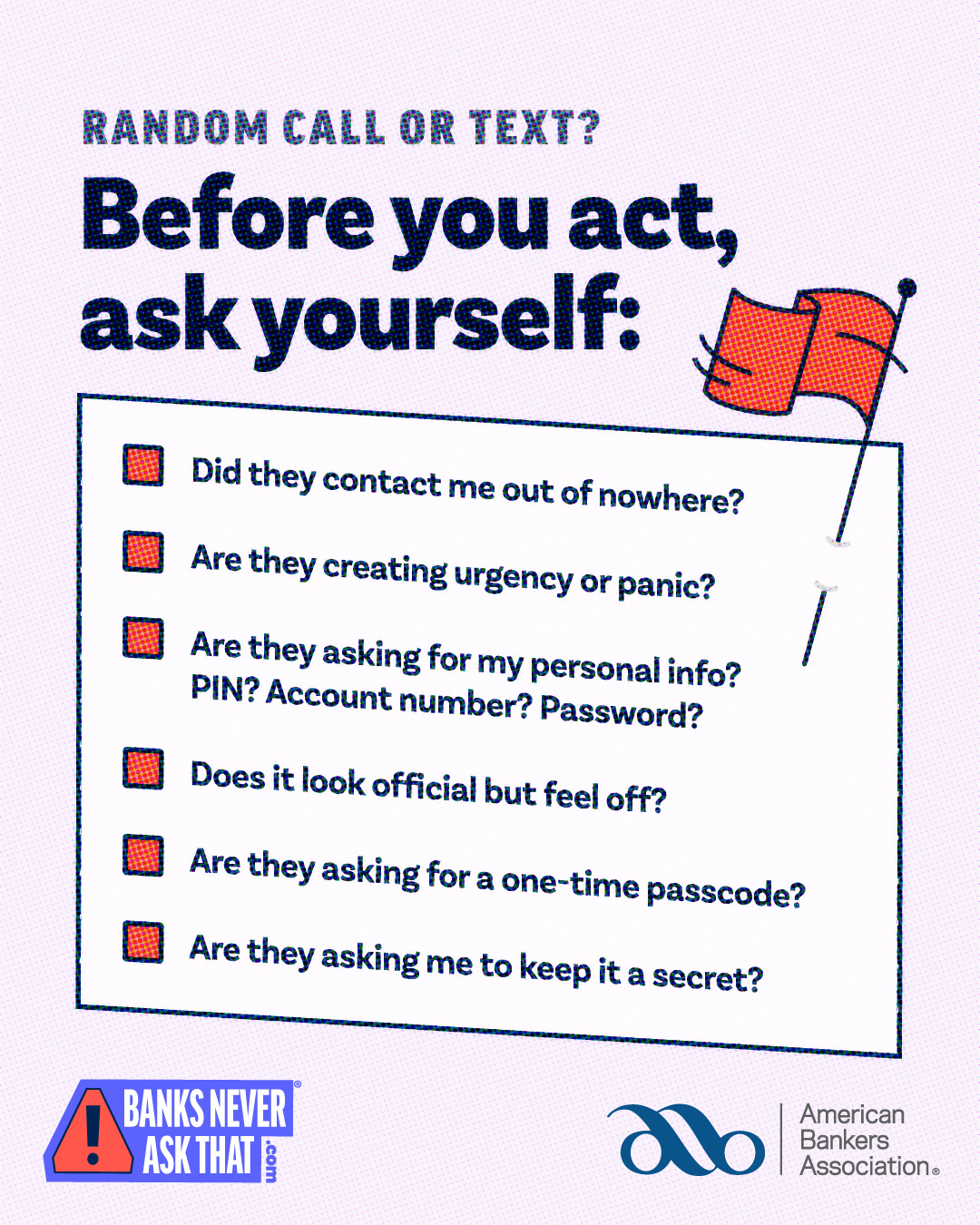
6 Scam Warning Signs You Should Know
Scammers often create a sense of urgency because they don’t want to give you time to think. A message might claim there’s suspicious activity on your account, that your account will be locked or that you need to take immediate action.
Before reacting, watch for these six warning signs:
You’re pressured to open a link.
Don’t click. A fraudulent link may lead to a fake website designed to steal your information.
Someone calls unexpectedly and tells you not to tell anyone.
Hang up. Requests for secrecy are a major warning sign.
You receive an unexpected email attachment.
Delete it rather than opening or downloading it. Scam attachments may contain malicious software.
Someone asks for confidential personal information.
Be suspicious of unexpected requests for information such as your PIN, password or Social Security number.
You’re pressured to send money through a payment app.
Stop and verify the request before taking action.
You’re told you must click, pay or respond immediately.
Slow down and independently verify what’s happening before doing anything.
These are the six key warning signs highlighted in the ABA’s 2026 Scam Slayer campaign.
A Call Looks Like It’s Coming From Your Bank. Now What?
Caller ID isn’t proof that a call is legitimate.
Scammers can spoof caller ID, making an incoming call appear to come from a familiar or local number. Even seeing an Illinois area code doesn’t guarantee that the caller is actually nearby.
If you receive an unexpected call from someone claiming to represent North Shore Trust and Savings and something doesn’t feel right, hang up.
Then independently contact North Shore Trust and Savings using a telephone number you know is legitimate. You can find verified contact information for the bank’s locations on its Contact & Locations page.
There’s an important distinction: you may be asked to verify confidential information when you initiate a call to your bank. That’s different from an unexpected caller contacting you and asking you to provide confidential information.
Protect Yourself When Banking Online
Digital banking makes managing your finances convenient, but it also makes it important to know you’re using legitimate banking channels.
North Shore Trust and Savings customers can access account information and banking features through the bank’s official Mobile Banking services.
If an unexpected email or text claims to be from North Shore Trust and Savings and asks you to follow a link to access your account, don’t use the link in the message. Instead, navigate directly to the North Shore Trust and Savings website or use the banking app you already have installed.
Watch Out for AI Voice Scams
Artificial intelligence has added another challenge to scam prevention: a familiar voice isn’t necessarily proof of identity.
AI technology can be used to imitate the voice of someone you know. A scammer may create an urgent situation involving a family member or friend and ask you to send money or provide personal information.
One simple precaution is to establish a family code word that can be used to verify someone’s identity during an unexpected or suspicious call.
If a caller claiming to be someone you know suddenly needs money or sensitive information, don’t rely solely on the sound of their voice. Hang up and call that person directly using the number you already have saved.
Suspicious Text or Email? Don’t Click
If an email or text message looks suspicious:
The ABA also recommends forwarding suspected phishing text messages to SPAM (7726) and reporting phishing attempts to the Federal Trade Commission.
For more information about protecting yourself and your accounts, visit North Shore Trust and Savings’ Fraud & Security resources.
Think You Fell for a Scam? Act Quickly
Even Scam Slayers can get caught off guard. If you believe you may have provided personal or financial information to a scammer, contact North Shore Trust and Savings immediately using a verified phone number.
Visit the bank’s Contact & Locations page to find the appropriate contact information rather than relying on a phone number or link supplied by the suspicious caller, email or text.
Be prepared to provide relevant details about what happened, including whether the person claimed to represent North Shore Trust and Savings and what personal or financial information you may have shared. The ABA recommends contacting your bank immediately if you believe important financial information has been compromised.
Flex Your Scam-Slaying Muscles
You don’t need sit-ups or bench presses to become a stronger Scam Slayer. You just need to practice a few important habits:
North Shore Trust and Savings encourages customers throughout northern Illinois to share these tips with family and friends, too. The more people who recognize the warning signs, the harder it becomes for scammers to succeed.
Visit BanksNeverAskThat.com for additional tips, videos and an interactive quiz designed to sharpen your scam-spotting skills. Spanish-language resources are also available through BancosNuncaPidenEso.com. The ABA campaign specifically encourages consumers to share these resources with family and friends to help spread scam awareness.
And remember: When something doesn’t feel right, stop and verify. Becoming a Scam Slayer starts with knowing what your bank will never ask.